LifeSync case study
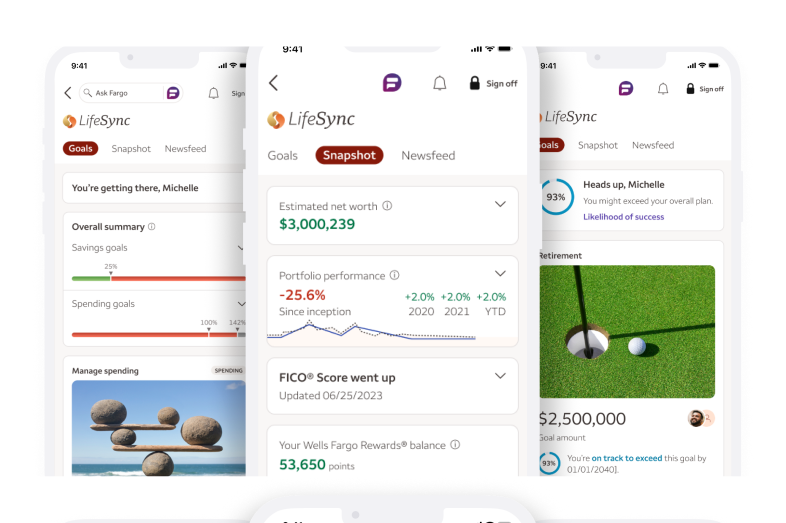

LifeSync
Helping people see their whole financial picture and stay on track with their goals
I designed a unified financial experience that brings daily spending, long-term savings, investing and personalized financial education into one calm, goal-driven mobile product.
The challenge
People managed banking, investing and budgeting across disconnected products, making it difficult to understand their complete financial position.
What I did
Combined interviews, survey findings and journey mapping to define a unified product, then designed and prototyped its goal, snapshot and insight experiences.
The result
A focused mobile experience that turns scattered data into one clear picture, supported by visible goal progress and useful next actions.
One platform instead of four apps
LifeSync was born from a fundamental disconnect in the fintech space: users were overwhelmed by multiple apps for banking, investing, and budgeting that didn't talk to each other.
Our mission was to synthesize these disparate experiences into a single, "Informed Elegance" driven platform that reduces cognitive load while increasing financial agency.
Financial management is fragmented
Users feel anxiety when switching between platforms, often missing the "big picture" of their financial health. The lack of visibility leads to poor decision-making and a general feeling of being out of control.
Scattered data
Fragmented data across 4+ different banking and investment apps.
Unclear picture
Complexity in understanding net worth vs. liquid cash flow.
No clear next step
Lack of actionable insights tailored to individual life goals.
What success meant for users and the business
User goals
- See every financial account in one current view
- Simplify recurring payments and savings
- Reduce stress with clear progress toward goals
Business goals
- Increase retention through a connected ecosystem
- Encourage relevant cross-product adoption
- Build a premium, trustworthy LifeSync brand
Understanding how people manage financial uncertainty
We conducted 15 semi-structured interviews and a quantitative survey with 200 participants to identify pain points in current financial habits.
Methodology
Qualitative: deep-dive interviews focusing on emotional responses to financial tracking.
Quantitative: data analysis of spending patterns and app usage frequency.
What we heard
People had plenty of data, but they lacked a single, trustworthy view and a clear answer to "am I on track?"
"I feel like I'm doing okay, but I don't actually know if I can afford that vacation in six months without checking three different places."
Research participant #09Three financial mindsets shaped the product
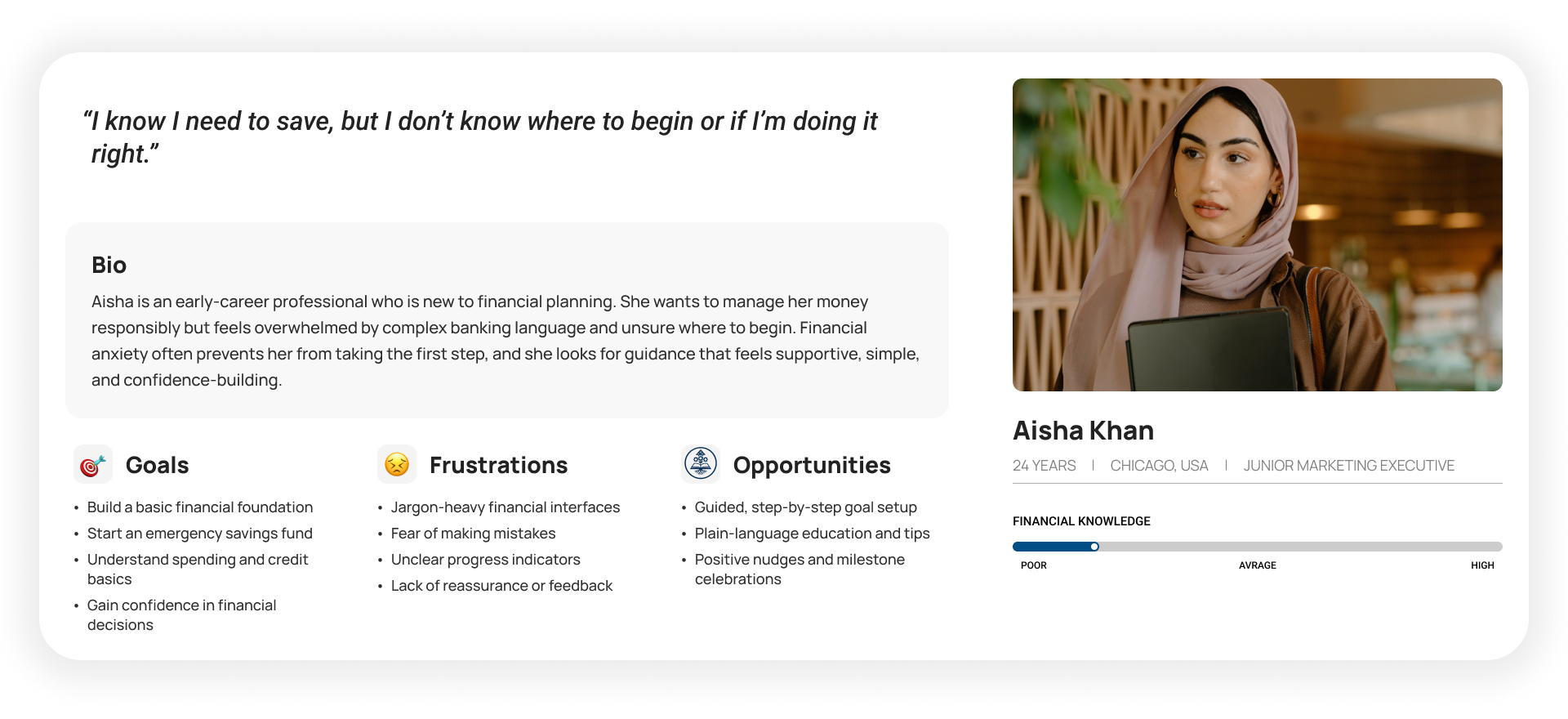
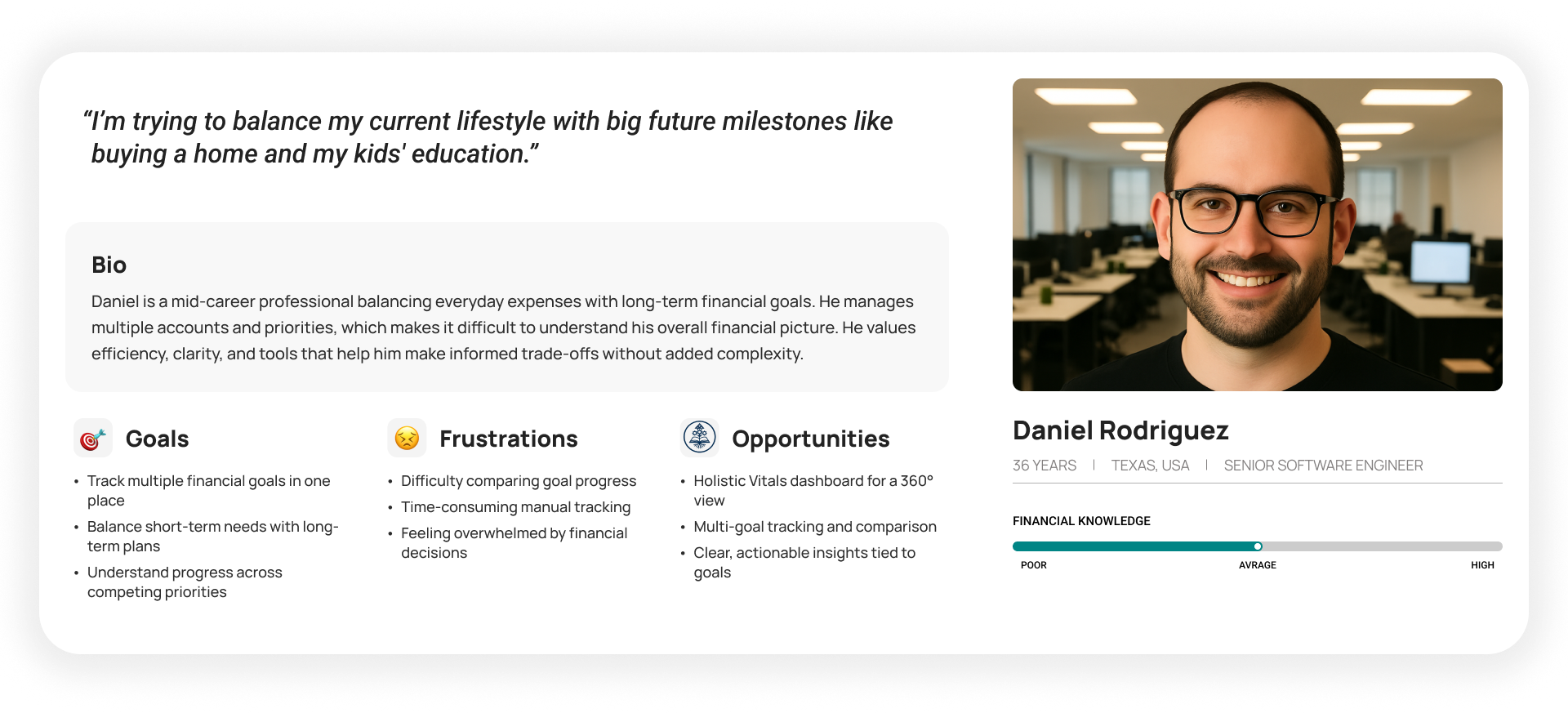
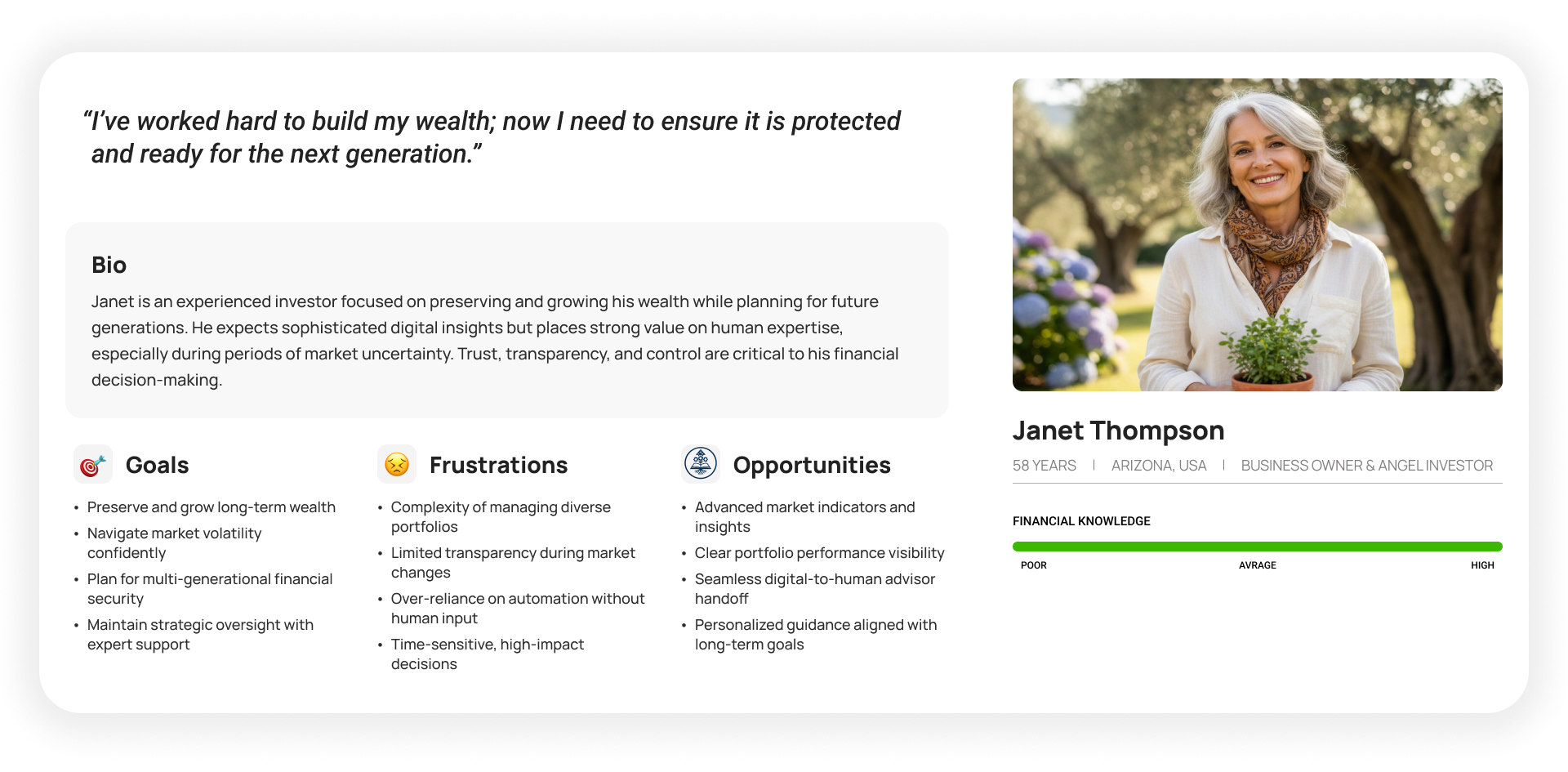
To simplify the financial journey, we focused on three primary archetypes that represent the core user segments of the LifeSync ecosystem.
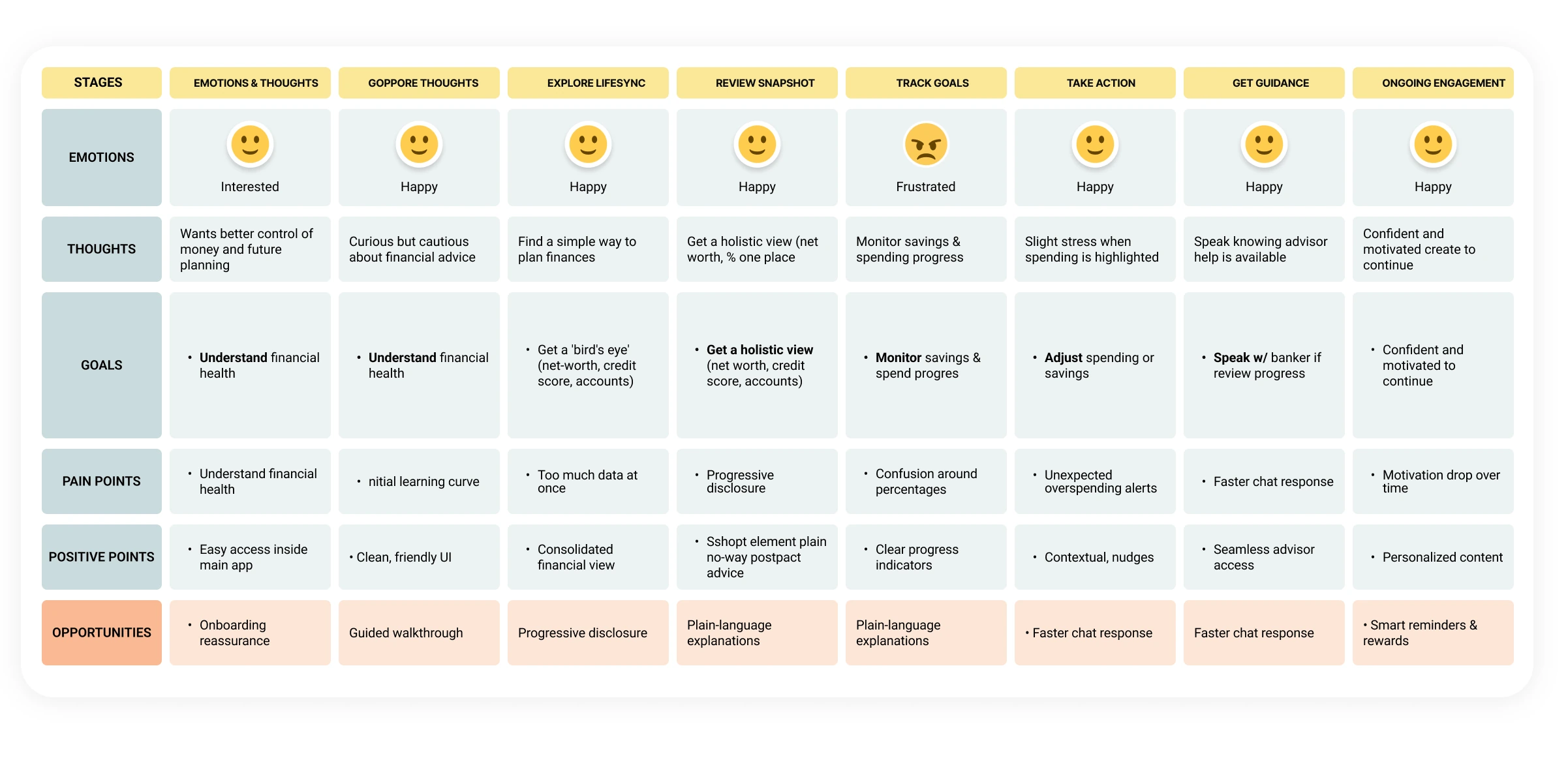
Mapping the moments when confidence falls
Visualizing the emotional highs and lows of the monthly financial cycle helped us pinpoint where LifeSync could provide the most value, especially during the mid-month anxiety dip.
Three experiences make the financial picture actionable
The prototypes focus on the moments users return to most: checking progress, understanding today's position and learning what could affect their finances next.
What the concept testing showed
40%
Less perceived financial stress
User testing showed a 40% reduction in perceived financial stress during the first 30 days of use. Users reported feeling more "informed" without being "overwhelmed" by the data.
1 view
A clearer financial picture
Users preferred one strong net-worth indicator with supporting details over a dashboard filled with competing charts.
Clarity comes from choosing what deserves attention
The strongest design decision was not adding more financial information. It was creating a hierarchy that helps people understand where they stand, what changed and whether their goals remain achievable.
Early concepts tried to make every metric equally visible. Testing showed that this increased cognitive load, so I centered the experience on net worth and goal progress, with supporting detail available when users need it.
What I'd do next
- Test account connection and consent flows
- Design privacy controls for shared financial goals
- Explore guidance for unexpected financial changes
How I'd validate it
- Measure success in understanding financial health
- Test goal comprehension across income patterns
- Track repeated use of snapshots and insights